
Packing and Unpacking Services in Stellenbosch
Everyone underestimates the kitchen.
They budget a weekend for the whole house, tackle the bookshelf on Saturday morning feeling productive, and then open the kitchen cupboards on Sunday afternoon and realise there are four hundred separate objects in there, half of them breakable, and no plan.
Packing is the part of a move that eats the most hours and gets the least respect. It is also the part that decides whether anything arrives broken, because almost nothing breaks in the truck. It breaks in the box.
This page explains how we pack, what it costs you in time to do it yourself, and the method we use room by room. Use it either way. If you end up packing your own house with this as a guide, we have done our job.
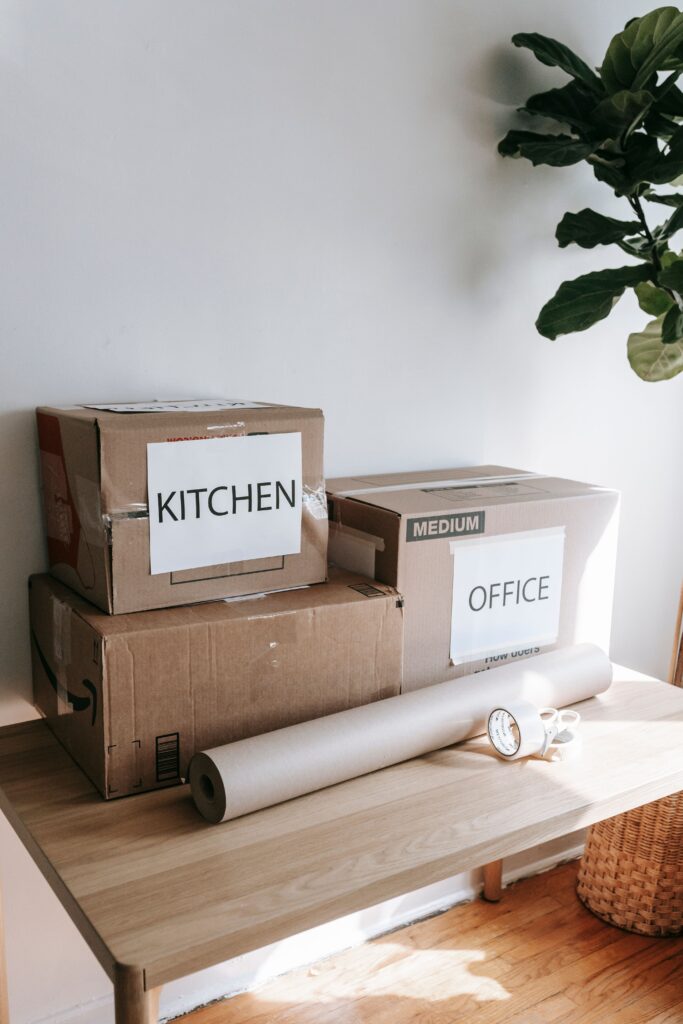
How Long Does It Actually Take to Pack a House?
Realistic figures, based on one person working steadily with materials already on hand. Double the pace if two people are working, but only if they are working on different rooms.
| Home size | DIY packing time | Professional team | Boxes required (approx) |
|---|---|---|---|
| Bachelor flat | 6 to 10 hours | 2 to 3 hours, 2 packers | 15 to 25 |
| 2 bedroom | 15 to 20 hours | Half a day, 2 packers | 30 to 45 |
| 3 bedroom | 25 to 35 hours | One day, 3 packers | 50 to 75 |
| 4+ bedroom | 40 to 60 hours | One to two days, 3 to 4 packers | 80 to 120 |
Those DIY numbers surprise people. Thirty hours on a three bedroom house is three full working days, or six evenings after work, and that is before you have moved a single thing.
The gap is not because professional packers work faster in some mysterious way. It is because they never stop to decide. Every item has a predetermined method, the materials are all within reach, and nobody stands in the kitchen holding a salad spinner wondering what to do with it.
What Breaks, and Why It Breaks
Almost every breakage we have ever seen comes down to one of four causes. None of them is the drive.
Air in the box. A half-full box with space at the top collapses when something is stacked on it. Boxes must be filled to the brim, with paper or soft items taking up any remaining gap.
Weight in the wrong box. Books in a large box. The box holds, the bottom does not. Heavy things go in small boxes, light bulky things go in large boxes, and that rule is not negotiable.
Plates packed flat. Stacked flat, plates crack under vertical pressure. Wrapped individually and stood on edge, like records in a crate, they survive almost anything.
Nothing between the glasses. Two glasses touching in a box will find each other every time. Every glass gets its own wrap and a paper divider between it and the next.
Get those four right and you have eliminated most of the risk before the truck arrives.
Our Packing and Unpacking Options
Full Pack
We arrive the day before the move with all materials and pack the entire house. Kitchen, wardrobes, bathrooms, study, garage, the lot. You do not touch a box.
Best for families with young children, anyone moving on a tight timeline, and people relocating for work who simply do not have three evenings to spare.
Partial Pack
The most popular option by a wide margin. You handle the straightforward rooms, clothing, books, bedding and personal items, and we handle the kitchen, the fragile items, artwork, mirrors and anything glass.
It is the sensible middle. You keep control of your own things, and the high-risk items are handled by people who pack them every week.
Fragile-Only Pack
For confident packers who want the crockery, glassware, artwork, mirrors, lamps and display pieces done properly. We typically do this in two to four hours while you carry on with the rest.
Unpacking and Placement
Underrated and worth every rand. We unpack boxes at the new address, place items into cupboards and onto shelves, assemble what needs assembling, and remove all the empty boxes and packing material when we leave.
That last part matters more than it sounds. A three bedroom move leaves seventy flattened boxes and a mountain of paper in your new lounge. Getting it out the same day is the difference between feeling settled and feeling under siege for a fortnight.
Packing pairs with our house moving service, and we run the same approach for commercial jobs through office relocations.
Materials: What You Need and Roughly How Much
If you are packing yourself, this is the shopping list. Buying too little is the classic mistake, and running out at 9pm on a Thursday is how things end up in supermarket bags.
| Material | What it is for | 3 bedroom quantity |
|---|---|---|
| Small boxes | Books, files, tinned goods, tools, anything heavy | 20 to 25 |
| Large boxes | Bedding, cushions, clothing, lampshades, plastics | 25 to 35 |
| Wardrobe boxes | Hanging clothes, straight off the rail | 3 to 5 |
| Packing paper | Wrapping and void filling. Not newspaper, the ink transfers | 10 to 15kg |
| Bubble wrap | Glass, ceramics, framed art, screens | 1 large roll |
| Packing tape | Base and top of every box, three strips each | 6 to 8 rolls |
| Marker pens | Labelling. Two, because one always vanishes | 2 |
| Mattress covers | Keeps mattresses clean in transit | 1 per bed |
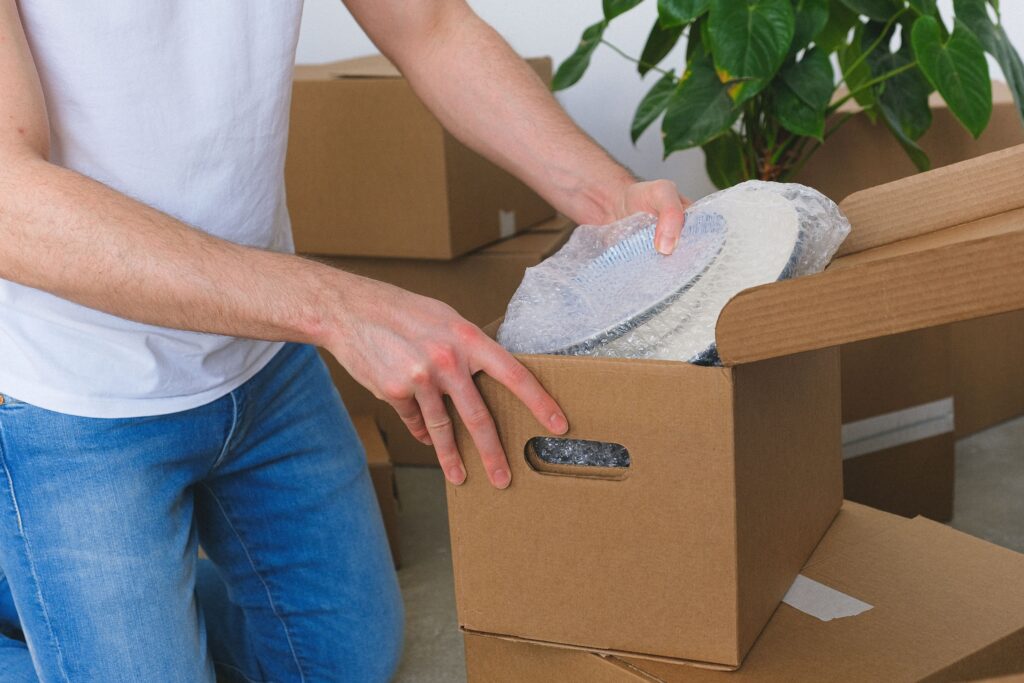
We supply all of this as part of any packing service. If you are doing it yourself, buy about twenty percent more than you think and return what you do not open.
The Room-by-Room Method
Kitchen
Start here. Always. It is the longest room in the house and doing it first means the rest feels easy.
- Empty and defrost the freezer two days before the move, not the night before.
- Plates wrapped individually, then stood on edge in a small box with paper at the base and top.
- Glasses and stemware wrapped individually, upright, with paper dividers between each one.
- Pots and pans nested with paper between them, into a large box.
- Pantry items into small boxes. Open bags of flour, rice or sugar into sealed containers first.
- Bottles of oil and vinegar taped closed at the cap and bagged, then boxed upright.
- Knives wrapped in a tea towel and taped, with “SHARP” written on the outside.
Bedrooms and Wardrobes
Hanging clothes go into wardrobe boxes on the rail, which takes ten minutes and saves an hour of ironing at the other end. Folded clothes can stay in the chest of drawers if the drawers are taped closed and the unit is light enough, which we will confirm on the day.
Bedding into large boxes. Jewellery, documents, passports and medication do not go on the truck at all. Those travel in your car, with you.
Lounge, TV and Electronics
Photograph the back of the TV and the media unit before you unplug anything. That photo will save you twenty minutes and an argument.
Original boxes are ideal if you kept them. If not, screens get bubble wrap and a flat, purpose-fitted box, and they travel upright, never lying flat.
Cables coiled and bagged per device, with the bag labelled to match. Remotes go in the same bag.
Study, Files and Books
Books into small boxes only. Spines down, flat, never packed to the point where the box will not close.
This is also the room where the biggest saving hides. Most households are carrying years of paperwork that could be shredded or scanned. Sorting it before the move costs you an hour and saves you moving four boxes you will never open.
Bathroom, Garage and Everything Left Over
Bathroom liquids taped at the cap and double bagged before boxing. The garage is always fuller than anyone remembers, so give it a full session of its own rather than treating it as an afterthought.
Paint, petrol, gas bottles, pool chemicals and aerosols do not travel on a moving truck. Dispose of them or transport them yourself. Ask us at the survey if you are unsure about a specific item.
Stellenbosch Specifics Worth Planning Around
A few local factors change how we plan a packing job here.
Wine collections. More common in Stellenbosch than almost anywhere else, and worth flagging early. Bottles travel in dedicated wine boxes with cell dividers, they go in last and come off first, and if you have a serious collection moving in midsummer we will talk to you about timing the load for early morning rather than mid-afternoon heat.
Heritage homes in the historic centre. If you are in the Dorp Street or Mostertsdrift area, packing timing matters because the carry from front door to truck is long and staged. Boxes need to be finished and stacked in one accessible room, not spread across the house.
Estate access. Welgevonden, De Zalze and similar estates often need vehicle and crew details submitted in advance. If we are packing the day before the move, that means two access approvals, not one. Sort it when you book.
University term dates. Late January and early February is the tightest window in the local moving calendar. If you want packing and moving on consecutive days during that period, book four to six weeks ahead.
Our full coverage area, including Somerset West, Paarl, Franschhoek and Cape Town, is on the areas we serve page.
The “Open First” Box
Pack one box last, load it last, and mark it clearly. In it:
- Kettle, mugs, teaspoons, tea, coffee, sugar
- Toilet paper, hand soap, towels, toothbrushes
- Phone chargers and a multiplug
- Bedding for one bed per person
- Medication, plasters, painkillers
- A torch, scissors, a knife and a roll of bin bags
- Anything your children or pets need in the first twelve hours
This is the difference between a bearable first night and driving to Checkers at Eikestad Mall at eight in the evening because nobody can find the kettle.
Unpacking Day: A Plan That Actually Works
Unpacking badly is how people end up living out of boxes for a month. The order matters.
- Beds first. Assemble and make every bed before anything else. Whatever else goes wrong, everyone sleeps.
- Bathrooms second. Twenty minutes, high impact.
- Kitchen third. The full session. Do it properly, in one go, and place things where they will actually live rather than where the box happened to land.
- Wardrobes fourth. Straight from the wardrobe boxes onto the rail.
- Everything else after. Lounge, study, decor, garage. This is where you can afford to take a week.
- Boxes out the same day. Flatten and remove as you go, room by room. Do not build a pile “for later.”
When we do the unpacking, we work in exactly this order and take the empty boxes and paper with us when we leave.
Should You Pay for Packing? An Honest Answer
No, if you have two free weekends, a small home, few fragile items, and you quite enjoy that sort of thing. Plenty of people pack their own houses perfectly well and the method above is all you need.
Yes, if any of the following is true:
- You have small children or you are caring for someone at home
- Your transfer date moved and you have lost your buffer
- You have a significant amount of glassware, ceramics, art or wine
- You are moving for work and cannot take leave to do it
- You have looked at the kitchen and quietly closed the cupboard again
The honest test is this. Work out what three full days of your time is worth, add the cost of anything that breaks because it was packed at eleven at night, and compare that against a quote. For a lot of households the numbers make the decision by themselves.
For a firm figure, use our get a quote page or call and we will arrange a walkthrough.
Frequently Asked Questions
Let’s Get You Packed
Packing is not complicated. It is just long, and it is the one part of a move where doing it slightly wrong at ten at night shows up as a broken serving dish two days later.
Whether you use the method above and do it yourself or hand the whole thing over, the goal is the same: every box full, every glass wrapped, every label pointing at a room.
Tell us your address, your bedroom count and your move date, and we will come back with a quote for a full pack, a partial pack, or unpacking at the other end. Start on the request a quote form or get in touch directly.